


Carpool needles in dentistry are a guarantee of high-quality, safe and painless anesthesia, the ability to control the dose of the anesthetic drug and be sure of the absolute sterility of all manipulations.
What are carpule needles
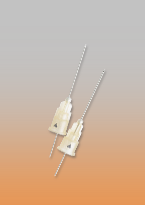
A carpule needle is a needle that consists of a hollow metal rod and a plastic cone (cannula). The long end, designed to introduce anesthetic into the tissue, ends with a cut. The short end serves to pierce and seal the carpula.

Types of carpool needles
Carpule needles vary in size and purpose. Needles are long, short, medium - they are all used for a certain type of anesthesia: conduction, intraligamentary, or intraperidontal, infiltration.
Long carpule needles are used to anesthetize several adjacent teeth in one quadrant, and also if infiltration anesthesia does not have the desired effect.
Carpool needles for intraligamentary anesthesia are used in the area of the anterior teeth and in the area of the molars. Such carpool needles guarantee rapid pain relief by injecting a small dose of anesthetic under high pressure into the periodontal ligament.
Carpool needles for infiltration anesthesia are designed to inject anesthetic into the mucosa. The dentist, moving the patient's lip a little to the side, makes an injection (usually under the periosteum). Then carefully insert the needle until it rests against the bone tissue.
High-quality carpule needles are a 100% guarantee of the sterility of all manipulations.