


The suture material is a surgical thread - not a single surgical operation can do without it. When choosing surgical threads, one should remember that they are valued: strength, reliability, biocompatibility with human tissues, the absence of a “sawing” effect, elasticity, resistance, and price.
This list can be continued, because the quality of the suture material is a guarantee of the successful completion of any surgical intervention.
There are many varieties of suture material designed to suit the specifics of surgical operations and have certain advantages and unique qualities that meet the goals and objectives of each specific situation.
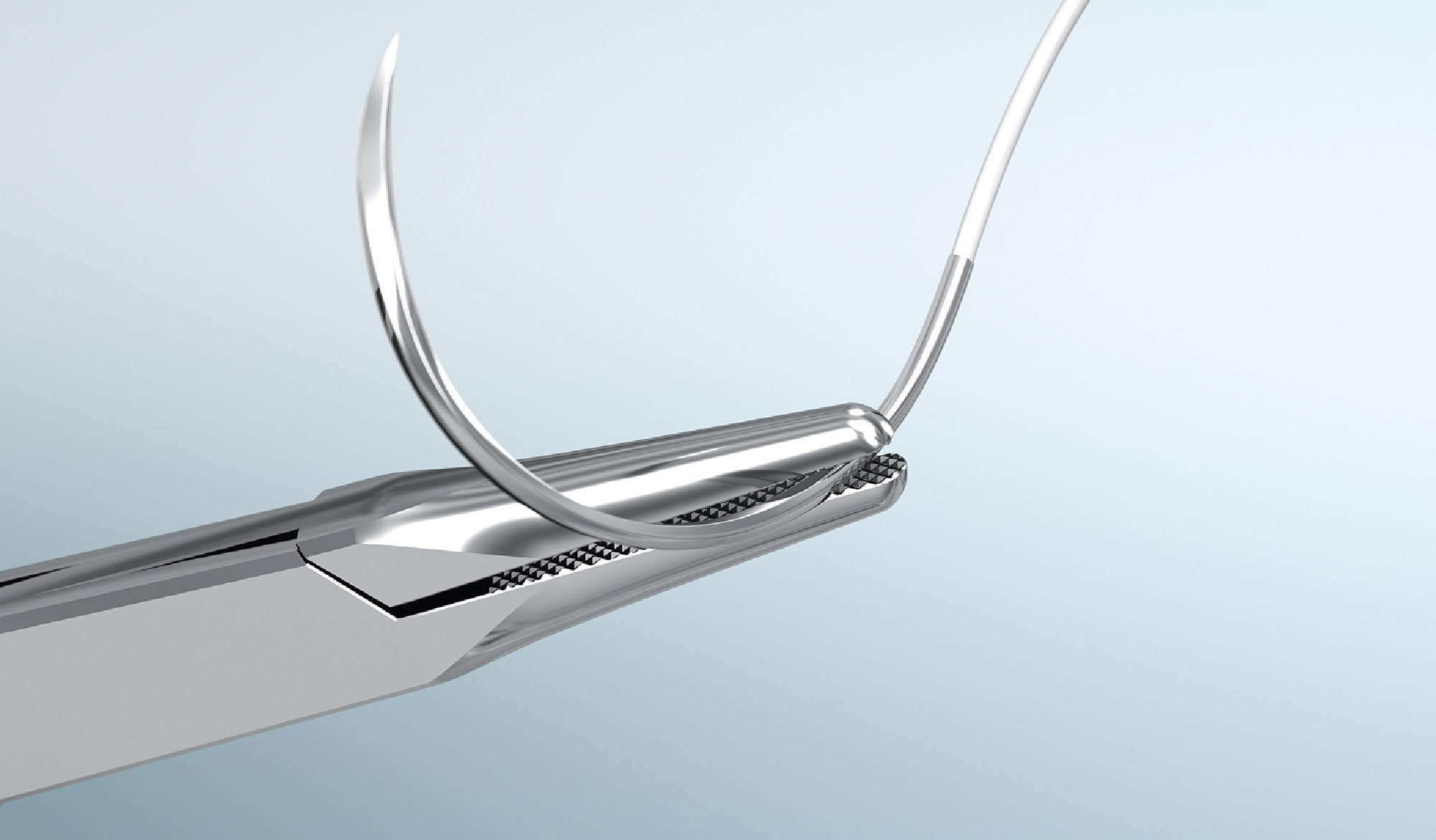
The suture material is made of different materials, respectively, differs in structure and biodegradation (resorption / non-absorption).
In terms of structure, surgical sutures are monofilament and polyfilament.
Monofilament, that is, a homogeneous surgical thread, has a smooth surface, the risk of injury during its use is significantly reduced. The advantage of such threads is also good elasticity, hydrophobicity, non-capillarity and non-wicking. The disadvantages include slipping, which means unreliability in the knot, which can be dealt with by tying several knots for the strength of the seam.
Another type of surgical threads are polyfilament threads, consisting of several fibers. This type of surgical suture is also durable, including due to a special weaving, twisting or a complex manufacturing method. The obvious advantage of this type of suture material is in special impregnation and coating, which reduce the sawing effect of the thread, improve its glide, and hence its permeability through tissues, reducing the risk of thread breakage.
Another feature of the suture material is its ability (or inability) to dissolve.
Non-absorbable surgical sutures, such as lavsan, mersilene, prolene, etc., are not inferior to the previous type of suture material in handling properties, they are also atraumatic and durable, convenient and, along with all the advantages mentioned, are not expensive.
So, suture materials can be very different, but always of high quality.